

Quick answer
Tour companies working out of West Yellowstone operate under National Park Service concession contracts or commercial use authorizations, entering through the West Entrance on US-20, where the standard vehicle entrance fee is 35 USD and stays valid for 7 days. Park access itself runs 00:00–23:59 daily. Winter road closures, not opening hours, dictate which itineraries can run.
West Yellowstone holds roughly a thousand permanent residents and sits one block from the boundary of a park larger than the state of Delaware. That imbalance explains the town's guiding industry. West Yellowstone tour companies operating from this small grid of streets range from single-vehicle family outfits to firms running fleets of vans and, when the roads close to cars, snowcoaches. Almost all of them share one legal footing: written authorization from the National Park Service, held either as a concession contract or as a commercial use authorization. That paperwork is not decoration. It sets group-size ceilings, insurance minimums, driver training standards and the rules governing where a guide may legally stop a vehicle along the Grand Loop Road. The differences that matter to a visitor sit below that legal layer. Some operators are transport-first: a comfortable van, a long loop, a driver who narrates. Others are naturalist-led, staffed by guides with biology or geology backgrounds who carry spotting scopes and know which Lamar Valley pullouts wolf watchers have been using that week. Group size separates them further, from private vehicles carrying four people to coaches carrying forty. Itineraries split roughly along two axes. Geyser-focused trips concentrate on the Upper Geyser Basin, Old Faithful, Midway Geyser Basin and Grand Prismatic Spring. Wildlife trips push north and east toward Hayden Valley and the Lamar, where bison herds, elk and the occasional grizzly draw early-morning traffic. A few guided Yellowstone tours from West Yellowstone combine both, at the cost of time in the vehicle. Scale is the context that makes the market for tour operators in West Yellowstone make sense. Madison Junction lies fourteen miles inside the West Entrance; Old Faithful is roughly thirty; the Lamar Valley is a different order of drive entirely. Park speed limits cap out at 45 mph, and a single bison herd on the Firehole stretch can hold traffic for twenty minutes. Distances that look modest on a map consume a full day. Guides absorb that arithmetic professionally — they know the Norris Geyser Basin parking rhythm, the Gibbon Falls pullout capacity, the hour when the Grand Prismatic overlook trail empties. They also handle the part most first-time visitors underestimate: the West Entrance station on US-20, where the standard vehicle entrance fee is 35 USD and remains valid for 7 days. The practical upshot is a short list of questions. Confirm that an operator holds current National Park Service authorization; the agency publishes lists, and reputable outfits state their permit status plainly. Ask what the vehicle is, how many seats it holds, and whether a naturalist or a driver is leading. Ask which basins and valleys the itinerary actually reaches, rather than which ones appear in the photographs. Ask whether park entry is arranged separately. The park itself keeps no gate curfew — access runs 00:00–23:59 daily — so departure times vary widely between outfits, and the line at 307-344-7381 remains the neutral source for road status. Read the operator descriptions carefully; among West Yellowstone tour companies, the honest ones describe the driving as clearly as the scenery.
“Distances that look modest on a map consume a full day.”
How to Select and Utilize West Yellowstone Tour Companies
This procedure takes you from a shortlist of West Yellowstone operators to a confirmed seat with a known meeting point, and usually takes about an hour of research plus a few weeks of lead time. Working through it in order is what keeps you from arriving without a guide who can read the wildlife corridors for you.
Verify commercial use authorization
Confirm the company holds a current Commercial Use Authorization from the National Park Service before anything else, since only authorized operators may guide inside the park. Ask for the CUA number directly rather than trusting a badge image on a website, which is the step most people skip.
Match group size to goals
Decide whether you want a small-vehicle tour with a naturalist guide or a larger coach, because group size determines how often the vehicle can stop for wildlife. Travellers often book the cheapest seat and then find the group is too large to pull over at short notice.
Read guide credentials carefully
Check whether guides are trained naturalists with spotting scopes, as this is what turns a distant shape in the sage into an identified animal. Company blurbs use the word guide loosely, so look for stated training or years of experience in the Greater Yellowstone ecosystem.
Book several weeks ahead
Reserve through the booking pages on this site well in advance, since reputable small-group operators fill their summer calendars months out. Waiting until you arrive in town usually leaves only the largest remaining groups.
Confirm pickup point precisely
Get the exact street address of the meeting point in West Yellowstone in writing, along with whether hotel pickup is included. Many visitors assume pickup is automatic and then lose their seat waiting in a lobby.
Contact the park directly
For anything a company cannot answer about conditions or closures, call the park at 307-344-7381 or check https://www.nps.gov/yell/index.htm. Operators sometimes repeat outdated road information, so verify at the source.
Reconfirm the day before
Call or email the operator the day before departure to confirm the time, the meeting point and any last-minute vehicle change. Confirmation emails sent at booking are frequently superseded and left unread.
Reaching West Yellowstone Tour Companies and Park Entrances
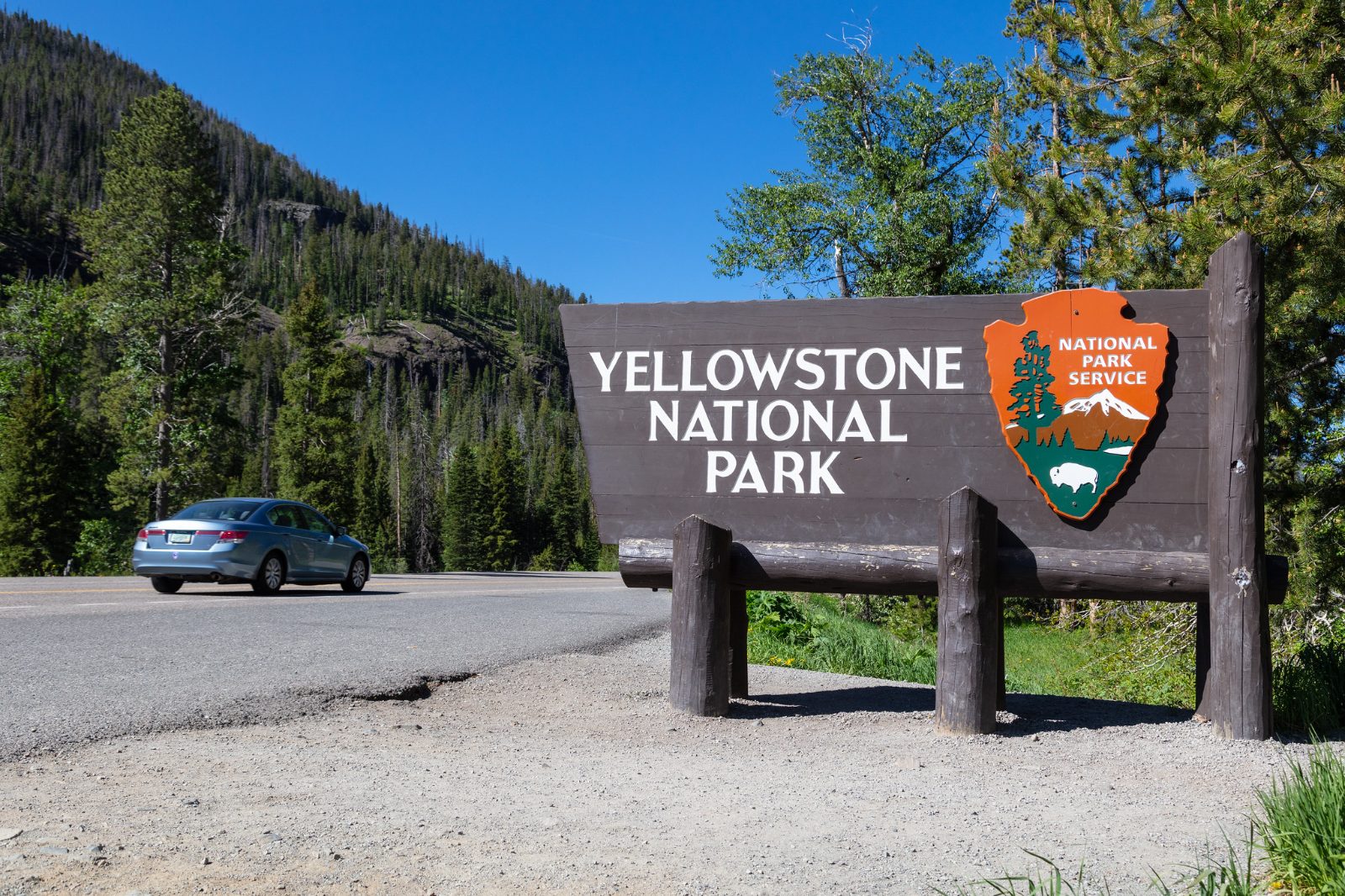
Most tour companies operate out of the town of West Yellowstone, located directly adjacent to the West Entrance at US-20, West Yellowstone, MT 59758, USA. Visitors typically meet their guides at designated office locations in town or at a centralized staging area before entering the park together.
US-20 to West Entrance
Guided tour transport
Local hotel to tour office
Best Time to Book West Yellowstone Tour Companies
The most effective window to engage West Yellowstone tour companies is during the shoulder seasons of May, September, and October. These months offer a balance between accessibility to park features and lower visitor density compared to the mid-summer peak.
Late Spring (May)
Moderate; early season activity.Cool with fluctuating temperatures 30°F–60°F.
Wildlife is active and roads begin opening, allowing better tour access before summer crowds arrive.
Summer (June–August)
Highest; peak demand for tours.Warm with average highs 70°F–80°F.
Tours often fill months in advance; book early to ensure availability.
Fall (September–October)
Low to moderate; decreasing demand.Cool, crisp air with 25°F–65°F.
Autumn offers clear weather and reduced park traffic, making it a reliable period for group excursions.
Weekday Mornings
Minimal; relative to park capacity.—
Following the recommended arrival window of 06:00–08:00 helps tour operators avoid traffic bottlenecks at geyser basins.
Verdict: For the highest availability and manageable crowds, book tours for Tuesday to Thursday in May or September.
West Yellowstone Tour Companies: Pre-Visit Checklist
Work through this list in order — the first items belong to the weeks before your tour, the last to the morning itself.
-
Reserve your tour weeks ahead — Small-group operators in West Yellowstone fill months in advance for summer dates.
-
Save the confirmation offline — Cell coverage drops inside the park, so keep a screenshot or printout.
-
Carry photo ID matching the booking — Operators check names at pickup, and some require ID for waivers.
-
Confirm the pickup point and time — Meeting spots vary by company along US-20 in West Yellowstone.
-
Pack layered clothing — Mornings near geyser basins run cold even when afternoons turn warm.
-
Bring 8x or 10x binoculars — Wolves and bears are usually watched from several hundred metres away.
-
Plan to be ready by 06:00–08:00 — That window avoids peak traffic and secures parking at popular geyser basins.
-
Load water, snacks, and a charged phone — Tours run several hours with limited services between stops.
Check availability
Frequently asked questions about west yellowstone tour companies
Everything you need to know about west yellowstone tour companies